
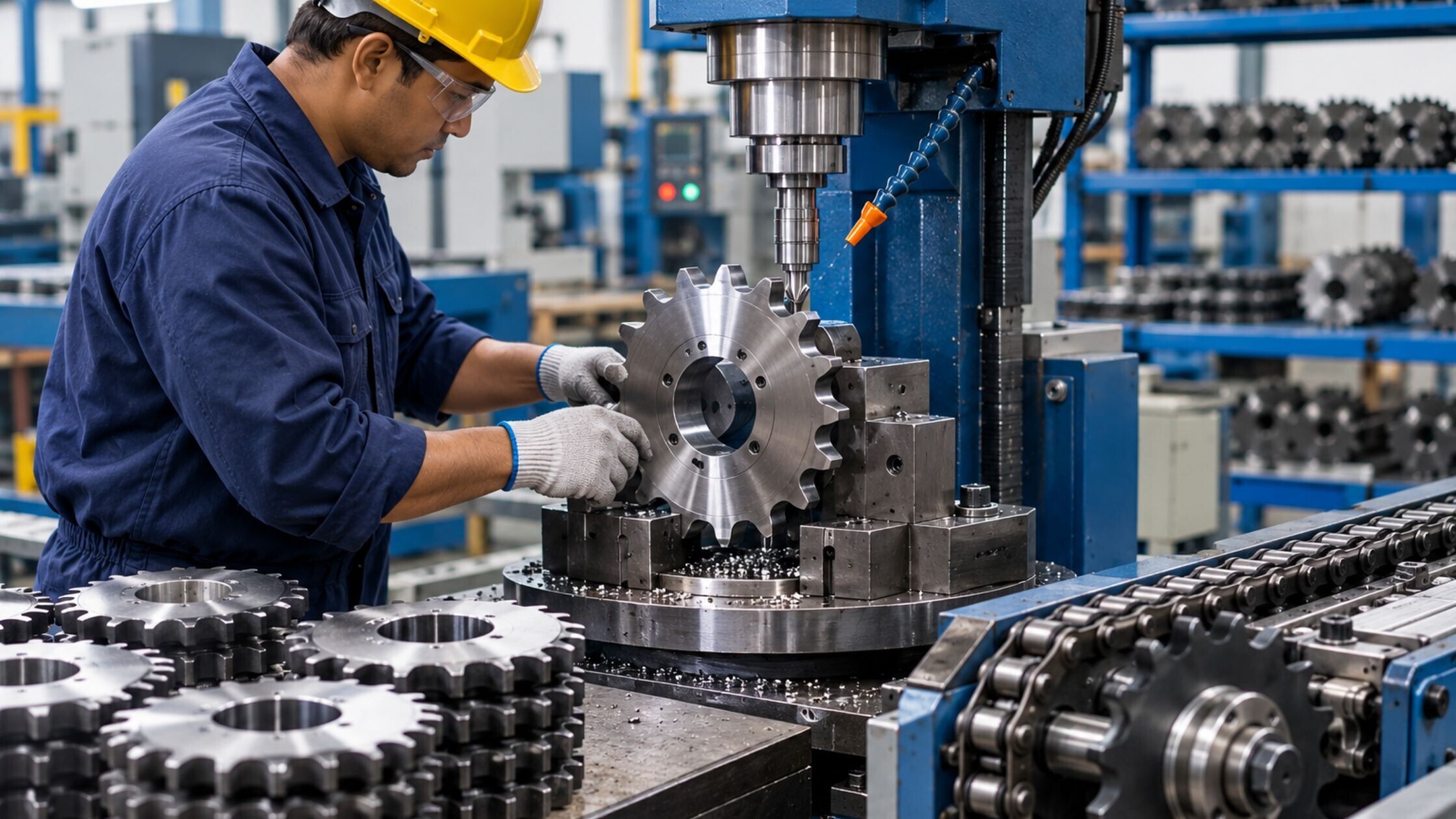
A custom conveyor sprocket starts with a design. But making the part takes several steps after that. The design needs to be checked, a sample can be made, the right material must be chosen, and the production setup needs to be prepared. A conveyor sprocket manufacturer can bring these steps together. This gives engineering and purchasing teams one clear path from the first design review to finished parts.
Why Custom Sprocket Projects Need Coordination
A conveyor system can need a special sprocket for its own setup. This can happen when a company is building a new conveyor or replacing a series of custom sprockets.
Custom projects can include:
- Drive belt sprockets
- Roller belt sprockets
- Sprockets made for a new conveyor system
The main parts of the project need to fit together. A change in the design can affect the material, tooling, or way the part is made.
Starting With 3D Data and Requirements
The project can start with the sprocket’s 3D design. The manufacturing team reviews the 3D data to understand the shape and size of the part. This gives the team a clear picture before production begins.
Other basic details are reviewed too:
- What the sprocket is being used for
- How many parts are needed
- What material is suitable
- Which production method fits the design
Starting with these details keeps the production plan tied to the actual part.
Prototyping Before Full Production
A prototype is a sample made before the full production run. It gives the customer a chance to look at the part and check the design. Changes can be made at this stage before production tooling is completed.
Prototype options can include:
- Computer-generated models
- Scale physical models
- Working sample parts
- Prototype parts runs
For a new conveyor system, this step gives the engineering team a chance to review the sprocket before a larger production run.
Choosing Materials and Manufacturing Methods
The right material depends on the needs of the conveyor system.
Custom sprockets can use materials such as:
- Carbon fiber
- Composites
- Metals
- Alloys
- Plastics
The team can look at weight, strength, temperature needs, and other part requirements when choosing the material.
The way the sprocket is made also depends on the design. Available methods include molding, casting, forming, machining, forging, welding, and metal fabrication.
Selecting the Right Tooling
Tooling is the equipment used to make parts in the required shape. There can be different tooling for different stages of a project:
- Prototype tooling for early samples
- Production tooling for the main production run
The amount of tooling needed is linked to the number of parts being made and the material used. Some tooling is suited to smaller production runs. Other tooling can support production of millions of parts.
Coordinating Production and Quality Control
After the design, sample, and tooling stages, the parts can move into production. Production resources can be located in the United States or internationally. Engineering teams, manufacturing facilities, and material suppliers can be coordinated around the project.
Quality checks can include:
- Checking finished parts
- Checking important dimensions
- Checking material documents
- In-process checks
- Statistical Process Control
- Third-party inspection
Progress updates also keep the customer informed as the project moves forward.
Where Carbon Fibre Moulding Fits
Carbon fibre moulding can be useful when a project needs a strong and lightweight material.
Carbon fiber offers:
- High strength
- Low weight
- High rigidity
- Impact strength
- Chemical resistance
Using carbon fiber in place of a heavier metal part is known as lightweighting. Carbon fiber is also an option for custom conveyor sprockets. Injection molding can create carbon-fiber parts with detailed features, including threads and gears.
Managing the Project From One Point
A single manufacturing partner can connect the main steps of the project.
The process can follow this path:
3D design → prototype → material choice → tooling → production → quality checks
This gives engineering and purchasing teams one point of coordination for the sprocket project.
A conveyor sprocket manufacturer with domestic and international resources can also coordinate the suppliers, engineering teams, materials, tooling, and production needed for the project.
Final Perspective
Custom conveyor sprocket production is easier to manage when the main steps stay connected. The design can be reviewed first, a prototype can follow, and the material and tooling can then be chosen for production. For projects where a lighter component is needed, carbon fibre moulding can also be part of the material and production discussion.
- Dalton Manufacturing and Consulting Group
- macdsolutions@gmail.com